
For two decades, broadcaster and disability advocate Sophie Morgan dreamed of seeing a mannequin that looked more like her. Now, in collaboration with Primark, her vision has rolled onto the high street. She tells Kate Stevenson about the project that’s been 20 years in the making
In the heart of Oxford Street, the mannequins in Primark’s window look back at me. They stand tall, frozen in place. Plastic reminders of fashion’s obsession with perfection.
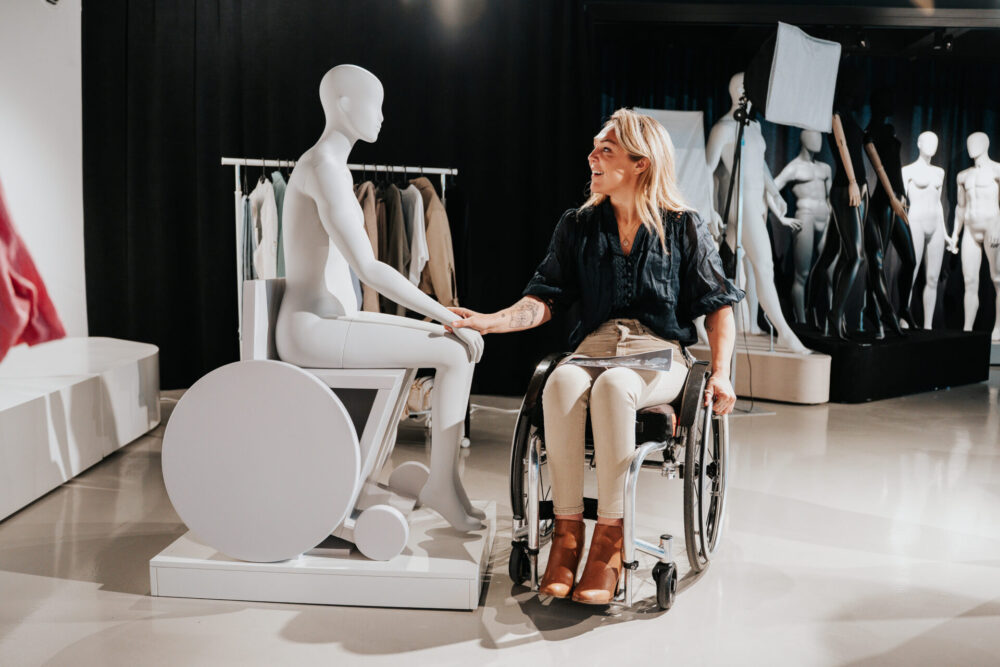
Except today, one figure breaks the mould. She isn’t standing. She’s seated, poised in a sleek wheelchair, wearing a denim jacket and an easy smile. Her name is Sophie, and her presence marks a quiet revolution on the high street.
THE DREAM
For years, television presenter and disability advocate Sophie Morgan was told there wasn’t room for a seated mannequin in shop window displays, or that the industry wasn’t ready.
“I’ve been waiting for nearly two decades,” reveals Sophie. “To finally see a seated mannequin in a shop window feels surreal. It’s a full-circle moment.”
Created with Primark’s visual merchandising team, the mannequin has been designed to represent wheelchair users – and to reflect millions of disabled shoppers. Although it may look like a small addition to an in-store display, in truth, it’s a big step for representation.
BEFORE THE SOPHIE
In fact, Sophie first started asking about the possibility of creating a seated mannequin when she was an art student, not long after the car crash in which she became paralysed at 18.
The question she wanted to address was simple: if mannequins influence how we see beauty, style and normality, what message does it send when none of them sit? “I remember going shopping and never seeing myself reflected. I wanted to change that,” says Sophie. “It wasn’t just about clothes: it was about belonging.”
So, in 2009, she created the Mannequal™, a prototype of a wheelchair for mannequins. It attracted a lot of attention – but no action. “That hurt,” admits Sophie. “I was young and idealistic so, when brands said no, I took it personally. Eventually I stopped trying. It was too painful to continue.”
Still, Sophie never forgot about the Mannequal. While she was building a successful career as a broadcaster and campaigner, the prototype lingered in the back of her mind as she waited for the world to catch up.
CONCEPT TO CREATION
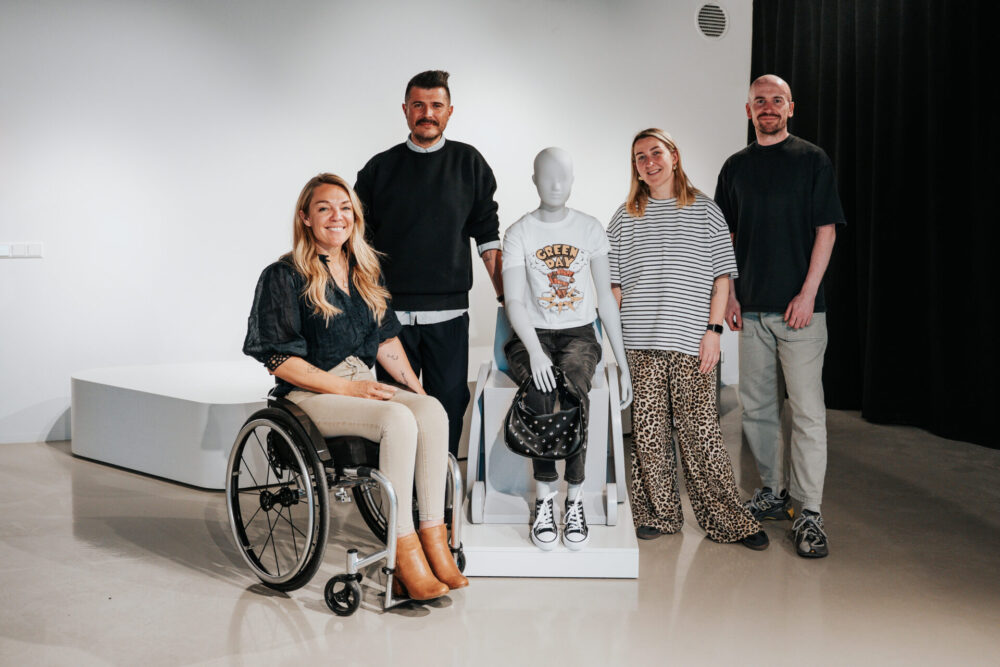
It took nearly 20 years for that day to come. Primark, who had already developed an adaptive clothing range for disabled people, approached Sophie to see if she could help them design a prototype.
Over 12 months, Sophie worked closely with them to refine every detail: the height of the backrest, the curve of the spine, the angle of the wheels, and so on. “Her legs are slightly atrophied, her arms look strong, and her posture is gently curved,” explains Sophie. “Because, naturally, that’s what happens when you sit all day. The only way for the mannequin to look real is if her experience feels authentic too.”
The Sophie mannequin is appearing in Primark stores across the world, from shop windows in the UK, to Milan Prague, Barcelona and even the USA. Each one will come with a styling guide so store teams can select outfits that work for a seated figure.
Sophie believes this will ensure each look will be both stylish and functional: “I want people to look at her and think ‘That outfit would work for me’ – the same way anyone else would.”
PLAYING CATCH-UP
Here’s the thing though. While it’s an important step for disabled shoppers, should it really have taken 20 years? As Sophie says, fashion may pride itself on creativity but, when it comes to disability, it’s been slow to evolve. The adaptive clothing market was worth $15.8 billion in the US alone in 2024, and its value is predicted to double by 2031 – yet inclusive representation still lags behind.
Sophie doesn’t understand why brands don’t invest more in the purple pound. At this point, being inclusive isn’t just the right thing to do, it’s simply good business strategy.
“The fashion industry is one of the most imaginative in the world, yet so limited in its thinking when it comes to body types and inclusion,” adds Sophie. “Designing for different bodies should be exciting, not a burden. Instead, the industry keeps creating for the same standardised shape.”
That said, a handful of companies have already started to change that narrative. Tommy Hilfiger, Nike and ASOS have all introduced accessible clothing lines in recent years, as well as experimenting with magnetic fastenings, sensory-friendly fabrics and adaptive fits.
But Primark’s seated mannequin takes inclusion to the next level, and the response has been overwhelming. “It’s been the most life-affirming, joyful, heartfelt thing. It’s magical,” Sophie smiles. “People have told me they finally feel seen. That’s what this is about.”
SITTING PROUDLY IN PLACE
In the end, the power of The Sophie lies in her quiet normalcy. She doesn’t shout, she doesn’t demand. She simply sits, stylish and still, in a space that for too long pretended she didn’t belong.
“Of course, this is a milestone, but it’s just the start,” affirms Sophie. “If other retailers are interested – get in touch.”
And, as shoppers pass the Oxford Street window, they may not realise the years it took to put The Sophie there. But, for those who do, she’s a hopeful reminder that visibility has the potential to change everything