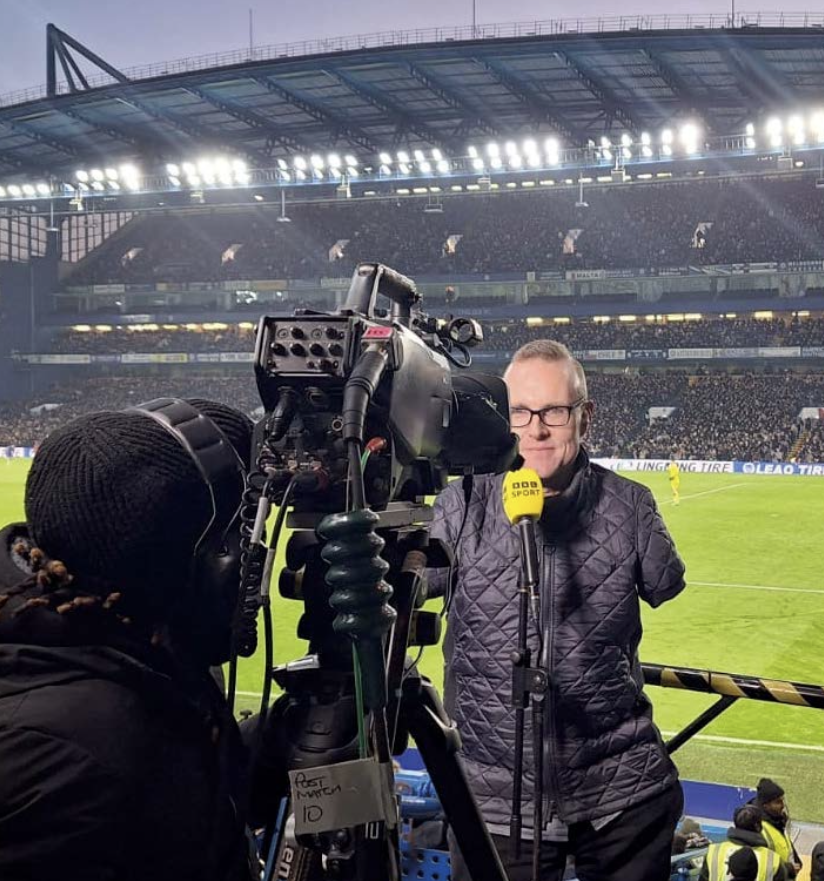
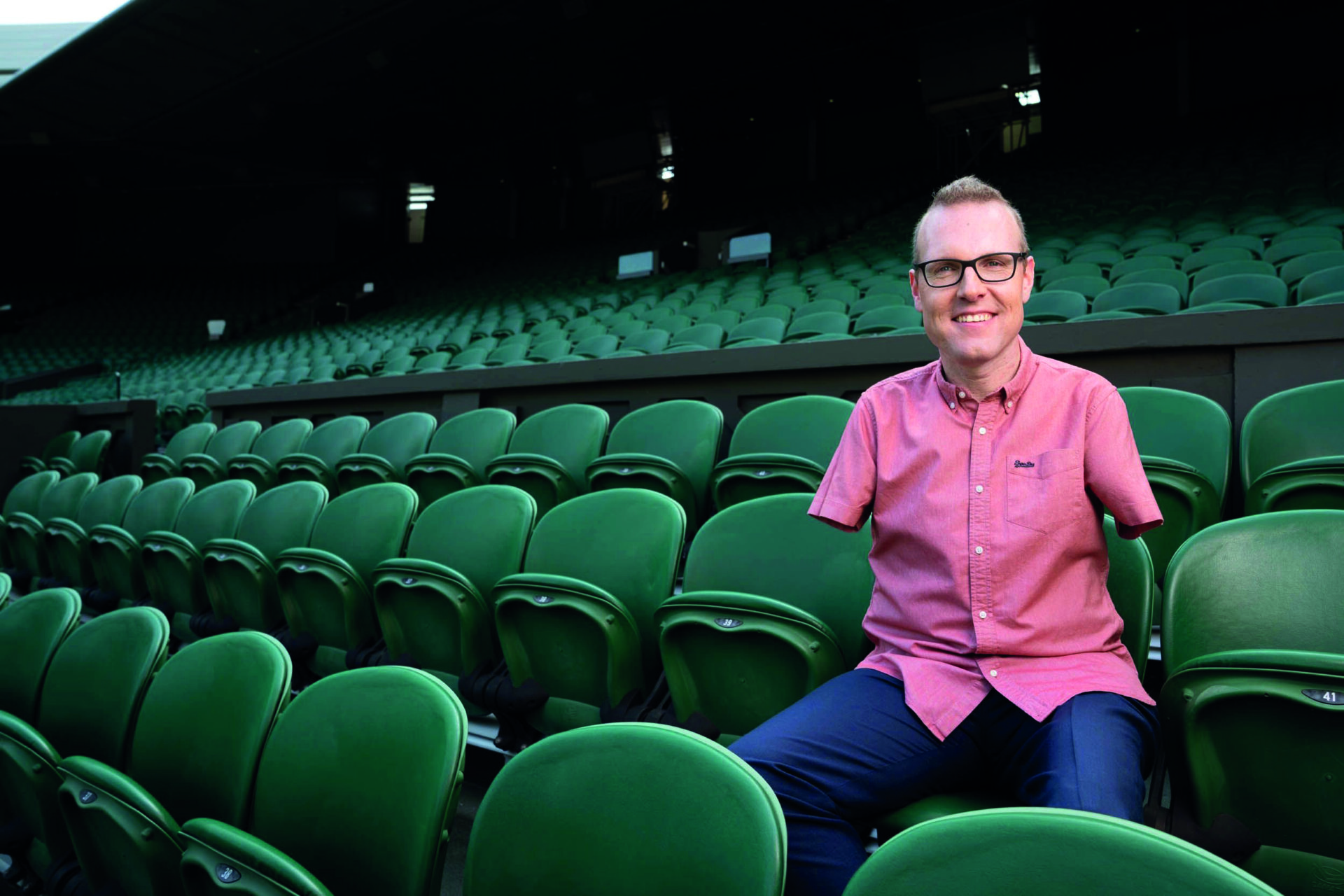
Andy Stevenson has become one of Britain’s most recognisable disabled sports broadcasters. At 45, the reporter, presenter and commentator is challenging perceptions of disability, while inspiring the next generation
Did you ever question whether a career in sports broadcasting was possible?
Not really. Looking back, I was incredibly lucky. My family, teachers and friends never made me feel like I couldn’t do something. There was probably a nice bit of naivety there too. I just thought, ‘I’d love to do that job, so let’s have a go’.
What advice would you give disabled people who want to work in the media?
Ask for whatever assistance you require. Don’t be shy or embarrassed about it. For my first BBC football matches, I insisted on trying to do everything alone: carrying my own bags, plugging in radio kit, and managing food and drink. Eventually I realised, ‘This is stupid, Andy’. Once I asked if an assistant could join me, everything was out in the open and I could fully focus on how I sounded on air, rather than practical concerns.
How do you define independence?
Independence means having whatever support, equipment or adaptations allow you to do what you want to do.
You’ve become increasingly visible on screen. Has that changed anything?
Covering the Paris Olympics was a significant moment for me because I reported on the Olympics as well as the Paralympics. After one boxing broadcast, some people online questioned how someone with no hands could cover the sport. I responded with a bit of humour, pointing out I also cover golf, tennis, snooker and football while wearing a prosthetic leg. The post went viral. If anything, the experience motivated me even more. The more disabled people who are visible in mainstream sport, the better – we can’t allow people to think disabled presenters should only cover the Paralympics.
Why should media companies hire disabled people?
We generally tend to be good problem-solvers and pretty resilient people. We have a whole host of different qualities and personality traits that can improve any workplace.
What keeps you motivated?
I love the idea of somebody seeing me walking into a football ground and assuming I can only be there to have a nice day out. Then later they turn on BBC One and realise I’m the reporter. That’s brilliant. The more familiar disabled people become in these spaces, the less remarkable it seems – and that’s exactly how it should be.