
In the run-up to Tourette’s Awareness Day on 7 June, Editor Melissa Holmes spoke with Luke Manton, a successful business owner and Tourette’s advocate, about his work to counter stereotypes and encourage acceptance
The recent release of I Swear – a film about John Davidson, who has Tourette Syndrome – has opened up conversations around the complex neurological condition, as well as helping raise awareness. But Tourette’s is often associated with its most notorious stereotype: involuntary swearing, which was frequently highlighted in the film.
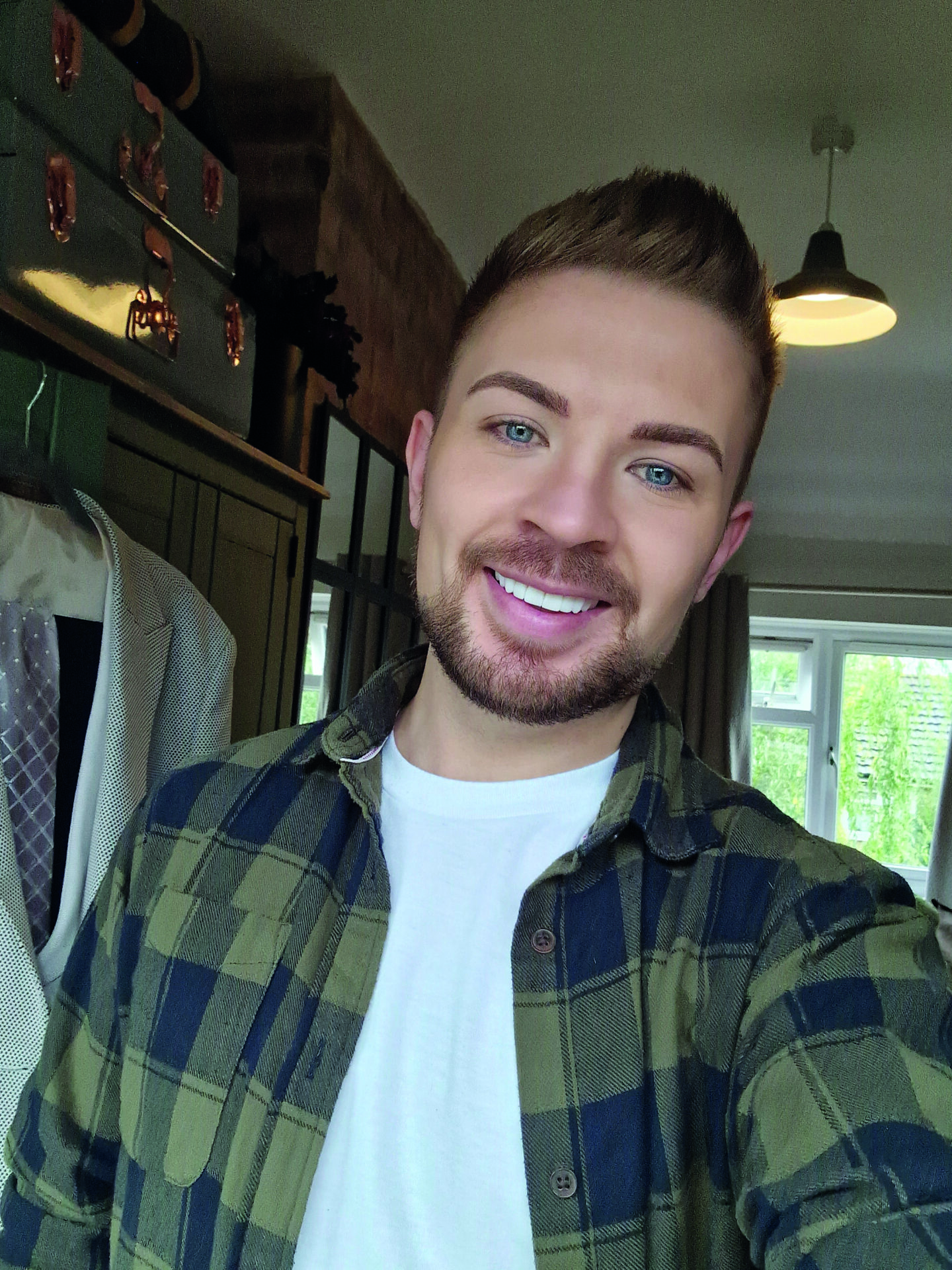
For people like Luke Manton, who lives with Tourette’s, the reality is far more nuanced. Luke’s taken it upon himself to challenge misconceptions through an innovative A to Z video series on his social media platforms. It’s just part of the work he’s been doing to raise awareness and support people with Tourette’s to feel more understood and accepted in society.
MORE THAN SWEARING
Many people associate Tourette’s with sudden outbursts of offensive language. This symptom is known as coprolalia, and it’s present in around 10-15% of cases. Luke wants to expand the public’s knowledge around Tourette’s by highlighting the lesser-known aspects, because living with Tourette’s is about more than just dealing with vocal tics. He’s discussed his own experiences with pain from physical tics, such as neck spasms and motor tics, which also affect daily activities like cooking and shaving. For those unfamiliar with Tourette’s, learning about these elements of the condition can be eye-opening.
Films like I Swear play a crucial role in making the public aware of Tourette’s, but they often fall short of depicting the condition’s true complexity. Luke feels “it didn’t go into the specific symptoms enough.” He’s working to fill that gap in representation. “We’re still taught that it’s just swearing, but that’s what gets the views.”
OPENING DOORS
Luke lives with coprolalia alongside other symptoms including motor tics, stammering, whistles, and ritualised tics that are linked with OCD (which is common in people with Tourette’s). He says: “The film raised general awareness, but my video series opens up that door to showing the depth of the condition.”
His A to Z series was born out of the realisation that “there are still so many gaps in people’s knowledge.” He explains: “It’s a quick, short way that I can get people to learn.” The response has been overwhelmingly positive. “What I’ve noticed is that people are being open, saying ‘I didn’t know this. Whereas before, it was almost like if you don’t know something, you would keep it quiet. But people are being open and honest, which is almost encouraging them to ask more questions.”
IGNORANCE TO ACCEPTANCE
Following on from his A to Z videos, Luke – who developed Tourette’s after a brain injury – will be doing a Q & A series, answering one question about life with Tourette’s every day. “We’re writing them down as they come in. Because if one person asks a question, you can guarantee that ten people wanted to ask it.”
It’s clear there’s far to go in raising awareness. “People still say ‘Tourette’s didn’t exist when I was young’… but it was discovered in the 1800s!” he laughs. Through his efforts, Luke hopes to foster patience and understanding, transforming ignorance into acceptance.
PLATFORM FOR CHANGE
Luke’s social media work has not only educated others but it’s also opened personal and professional doors. He says: “You do have to have a thick skin to be able to do it!” But his efforts are paying off. He’s founded his own successful, inclusive business offering virtual PA services to other businesses, plus his content catches the eyes of companies that now invite him to share his experiences.
INSPIRING THE FUTURE
Luke is especially passionate about the influence he might have on younger people with Tourette’s and their families. By showcasing his career achievements, personal milestones, and life as a proud dad, as well as working closely with the charity Tourette’s Action, Luke’s showing it’s possible to lead a fulfilling life with Tourette syndrome.
Authenticity is something of an overused buzzword, but Luke has it in spades, and his unique approach is helping him challenge public perceptions and encourage others with Tourette’s to advocate for themselves. All of this feeds into a bigger goal. Luke’s journey shows there’s no single path to success, and he wants to demonstrate that, with determination, people with Tourette’s can achieve their ambitions.
He reflects: “I want to show that you can have a version of normal life with Tourette’s. Some people are surprised that I even have a job. I think the narrative today, especially with social media, is you have to be perfect – to look perfect, have the perfect body – to do well. But there’s a route for everybody. It’s just finding the right one. On paper, I should not have been successful, and this should never have worked. But here we are, so I’m clearly doing something right!”