
Now that summer is on the horizon, let’s look at how to make our green spaces more accessible

As we move into late spring and early summer, gardens, balconies and even windowsills across the country start to come alive. Gardening is a simple pleasure for many people and, thankfully, it doesn’t have to mean digging up a lawn or spending hours on your knees weeding. It can be as simple as growing herbs on a windowsill or tending a single pot. With the right approach – and a few adaptations – it’s something almost anyone can enjoy.
And what’s more, it’s great for your wellbeing. As well as being a form of exercise which can help lower blood pressure and stress, gardening can even reduce symptoms of anxiety and depression. Research has found that access to a garden – even if it’s a few containers on a balcony – has a positive impact on stress. The act of nurturing a plant and taking care of green spaces can deliver real benefits for people’s mental health, whether they’re living with PTSD symptoms, using time in nature as a way of managing pain, or relieving loneliness by meeting new people through a community garden project, for example.
START SMALL
You don’t need half an acre of lush lawn and blooming borders to be a gardener – you can create a calming green vibe with houseplants or even a mini greenhouse on your window ledge. Starting small is often the best approach. If you have a windowsill, you can try herbs like basil, mint and chives. Don’t forget you can cook with these too! If you have a balcony or doorstep, pots are your pals – you can grow a wide range of flowers and even some vegetables like salad leaves or tomatoes. And, if you have a garden, you can start small by beginning with a raised bed or a few containers.
Accessible gardening is about adapting the activity to suit you. Removing barriers – whether physical, social, or environmental, means everyone can take part. So start with what you have, and consider how you can make it work for you. Gardening is as flexible and changeable as the seasons so, if something doesn’t work, you can always try something else.
GO GREEN
When planning what you’re going to do, as well as thinking about what’s manageable for you in terms of size, time and the amount of upkeep it will require, it’s a great idea to consider how you can garden to support wildlife. Eco-friendly gardening is great for you and the planet. And, although fake grass is popular and may look the part, it’s really not great for the environment.
Using bee-friendly plants to attract pollinators, creating a simple bug hotel, cutting a hedgehog hole into the base of your fence, and adding a bird feeder, bird bath or even a small pond (with all safety aspects considered) will enable you to welcome nature into your garden. Birds and insects can also help with pest control, reducing the amount of chemicals you need to use, and the amount of work you have to do.
GET STUCK IN
Gardening is a simple pastime – there’s no need to spend money to learn how to do it, and seeds, equipment and tools can be picked up cheaply. In terms of learning the skills needed, there are plenty of options. National charity Thrive offers advice on gardening for disabled people, including tools and techniques, and The RHS website provides beginner-friendly guides and inspiration – plus its gardens are great to visit, if you have one nearby!
Your local council or community centre may also run free or low-cost gardening groups, which can be a great way to learn new skills, meet new people, and help make a positive difference to your area.
And there’s a world of tips and advice online via videos, tutorials and social media accounts, which are often focused on small spaces, easy methods like no dig gardening, and accessible options. We love Gardener’s World presenter Sue Kent, who has a limb difference, and Ben the Grower, who uses the no dig method and has a spinal injury.
MAKE IT WORK FOR YOU
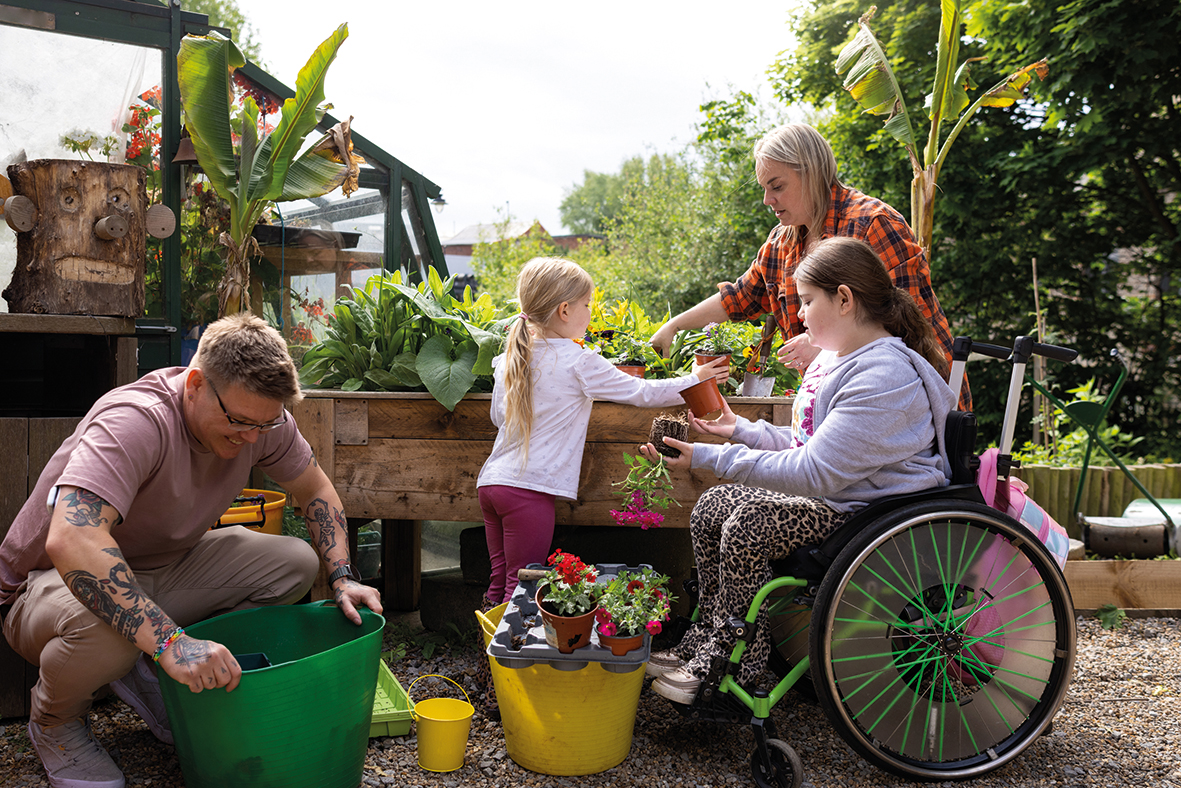
Making gardening more physically accessible is important. Simple adjustments will help reduce the strain of bending, reaching, or pressure on joints. Try raised beds or planters to bring plants up to a comfortable height, vertical gardening (using walls, shelves, or hanging pots), or sitting while gardening, using a stool or wheelchair-friendly layout.
You can also look into adaptive tools that are lightweight, easy to grip, and designed to reduce strain. These don’t need to be expensive, and you don’t need to invest in them straight away – just get what you need. You can also improvise with tools – improve grip by adding foam or tape, for example, or lengthen the reach of a hose by inserting a bamboo cane into it.
Gardening should feel good, rather than feeling like hard work. Listen to your body (this activity can be very physical!) and don’t overdo it. Focus on the tasks you enjoy doing, whether that’s weeding, watering, or just being outside, and pick a time of day when your energy is highest.
Gardening offers more than just plants. It can improve mood, provide gentle movement, and connect you with nature – all at your own pace.