
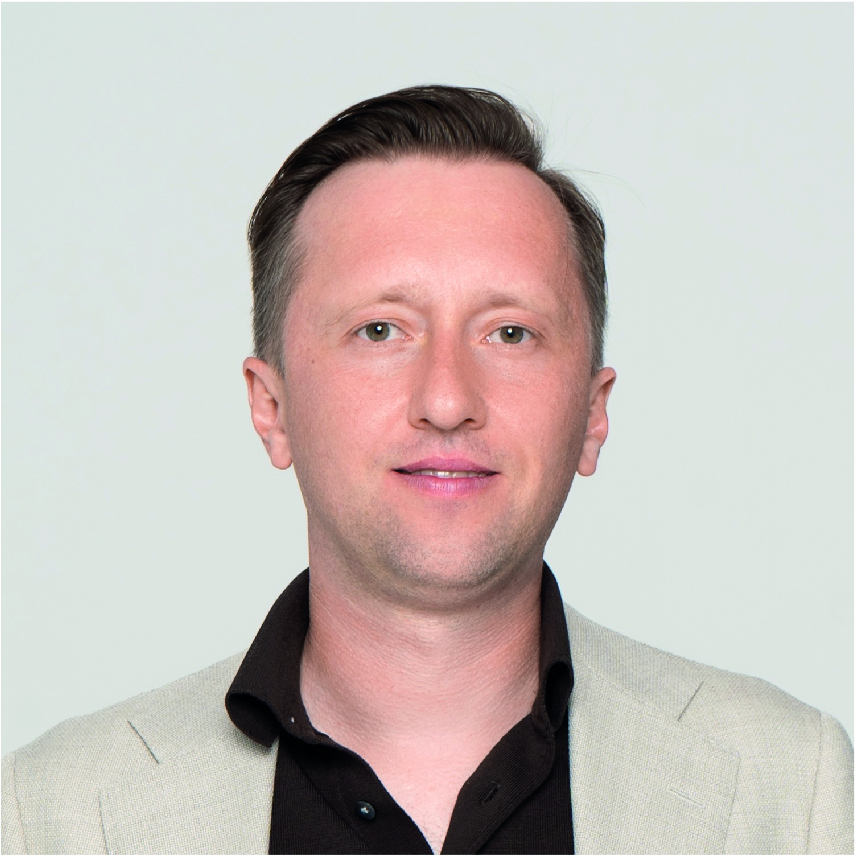
When Mykhailo Kalitkin talks about inclusive education, he doesn’t begin with policy papers, technology, or government reform. He begins with his son
Nearly a decade ago, Mykhailo was standing in the street with his young son Kirill during a meltdown. Following advice from specialists, he knew the best course of action was to wait calmly with his autistic child, and allow the moment to pass. Yet strangers stopped to tell him he was handling the situation incorrectly. Some accused him of being uncaring, while others offered unsolicited advice.
This moment exposed a wider problem to him: “Society is not ready to accept all needs from diverse children.” That realisation would eventually lead him to create MIKKO, an educational support platform designed to help schools better support children with special educational needs and disabilities (SEND).
A GROWING CHALLENGE
The issue is becoming increasingly urgent. According to the latest figures from the Department for Education, more than 1.7 million pupils in England have special educational needs. That represents nearly one in five school-aged children, and autism remains one of the most common conditions among pupils receiving support.
At the same time, demand is placing enormous pressure on schools, local authorities and families. There are long waiting lists for assessments in many areas, and families often report having to fight for support.
Mykhailo remembers moving between specialists, trying to find real help. “The hardest part wasn’t accepting the diagnosis. It was working out what to do next. The biggest challenge was the gap between the issue I could see and the support we needed.”
It’s a situation many families can relate to. A child may receive an autism diagnosis or be identified as having additional needs, but translating that information into meaningful classroom support is often another matter entirely.
THE REALITY OF INCLUSION
In recent years, inclusion has become a central principle of education policy. One of the fastest growing arguments is that inclusion can’t be measured by physical presence in mainstream education.
Another, Mykhailo says, is that children with SEND require completely different educational content. “There’s no special maths for autistic children,” he adds with a shrug. “The maths is the same.”
The difference lies not in the curriculum itself but in the methods used to help pupils access it. Research has consistently shown that teachers want more practical SEND training. While awareness of autism, ADHD and other neurodivergent conditions has improved significantly, translating that understanding into everyday classroom practice remains challenging.
Mykhailo has encountered the same issue while working with schools internationally. “Teachers and specialists do not know how to help. They have no real instruments,” he reveals.
His argument is not that teachers lack commitment. Rather, they often lack immediate access to practical guidance when problems arise. “Inclusive education is like a special forces army team. They have the same goal as the regular units, but they need better tools and instruments to help.”
A COMPREHENSIVE APPROACH
Another lesson emerging from SEND research is the importance of partnership. Parents often possess a depth of knowledge about their child’s needs, triggers and strengths that others don’t understand.
“Most conversations about inclusion begin with the child,” explains Mykhailo. “I’ve come to think they have to begin with the family as well.”
He argues that schools, families and specialists should operate as a “single team.” Effective support can only begin when you understand the whole child – not just their behaviour in a classroom. “It’s essential we involve parents in the school setting, because it’s important that we act as one team,” he asserts.

A BRIGHTER FUTURE
Earlier this year, MIKKO received the Best Special Needs and Inclusion Solution award at the ETIH Innovation Awards 2026. But Mykhailo says success is measured less by industry recognition and more by the outcomes for children.
His son’s personal journey informs his optimism: “One of my proudest moments is seeing Kirill stand in front of his classmates and explain autism through his own eyes. When we began this journey, he was non-verbal, relied on alternative communication systems, and faced significant sensory challenges,” Mykhailo smiles. “Today, he attends an international school in Portugal, has adapted to learning in different languages, and is thriving.”
“Other parents often ask me, ‘How can I help my child achieve what Kirill has achieved?’. For me, the award is proof that when children receive the right support, they can succeed in mainstream education, participate fully in everyday life, and reach outcomes that once seemed impossible.”
What started as one family’s struggle to find the right support has come to reflect a bigger challenge: how to turn the promise of inclusion into a reality for neurodivergent pupils.
“My son is the reason I understand any of this, and the reason I keep at it,” concludes Mykhailo.