
Tim Rushby-Smith on spoon theory, and the energy spent just trying to get somewhere

I am guessing that you, dear reader, are familiar with ‘spoon theory’? A summary, just in case: Spoon Theory was a metaphor created by Christine Miserandino in 2003 to give people insight into life with chronic illness or pain. The theory uses spoons to represent energy, and describes how every act requires energy that is then unavailable for other things.
For example, if getting up, washed and dressed in the morning requires a huge effort, then one has less energy for fun things in the evening. Thus, planning requires consideration of extra effort that may be hidden to others.
USING SPOONS
I mention this because I have recently come to view my mental capacity for public interactions in the same way. When I am out, I’m primed for interactions that can take energy I don’t really want to spend.
This might mean having to prod people in noisy environments, so they become aware of my presence and move out of the way (or people ending up on my lap when they try and dart through a ‘gap’ in the crowd), staff screaming at people to clear a gap wide enough to drive a bus through (making me feel very conspicuous), or the inevitable hassles over disabled toilets (who gets to use them, why they have been turned into a staff locker room and food store, and so on).
PRIMED
The way that such challenges affect me is akin to a surge of adrenaline; I’m primed, so I move fast, darting through gaps, occasionally shouting at people who haven’t seen me, desperate to get to the front of the crowd where I can see what’s going on.
On more than one occasion, I have been chided by people close to me. They ask me to relax, and point out that there’s no rush. Objectively, I know that. But I’m expecting confrontation, or hassle at best.
Even when we’re heading out for dinner with friends, I will spend some of the journey wondering if I’ll be able to get my knees under the table, if there will be steps or no accessible bathroom. Don’t get me wrong, our friends are very considerate, but there’s still the possibility of misunderstanding.
EXTRA THINKING
I know everyone around the table has their own daily travails to deal with, but my paraplegia means that – even after 21 years – I have to make these extra calculations, and sit with the anxiety that begins whenever I leave the house.
All of which means that, by the time we start the meal, I’m already a few ‘spoons’ down. I can only hope we’re not having soup…
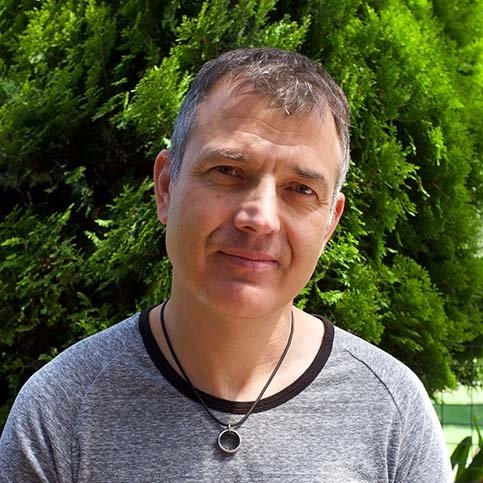
Tim Rushby-Smith
Originally from London, writer, artist and paraplegic Tim Rushby-Smith is based in Australia. He is the author of two books: Looking Up and Beyond the Break.
Follow Tim on Instagram.