
Rather than being the ones receiving care, disabled people can make a huge difference by working in healthcare. We chat with two disabled people involved in the sector, and learn how a career in this wide-reaching industry could work for you
The healthcare sector is one of the UK’s largest employers, but many disabled people still assume the careers it offers are out of reach. Think of a doctor rushing through A&E or a paramedic lifting a patient onto a stretcher, and you probably think every role in healthcare demands peak physical fitness. However, the NHS and wider healthcare sector offer hundreds of roles, many of which can be adapted to suit different disabilities and long-term health conditions.
Disabled healthcare professionals bring real value to the workplace: lived experience. They understand how it feels to navigate healthcare systems, advocate for themselves, overcome barriers, and communicate with compassion. Those experiences make them exceptional colleagues and mean they often provide a level of empathy that can’t be taught. Emergency care assistant Martin Corey says: “The patient can be a lot more open, because they know I’ve been through something similar.” This connection can lead to better patient outcomes as trust and understanding are established more quickly.
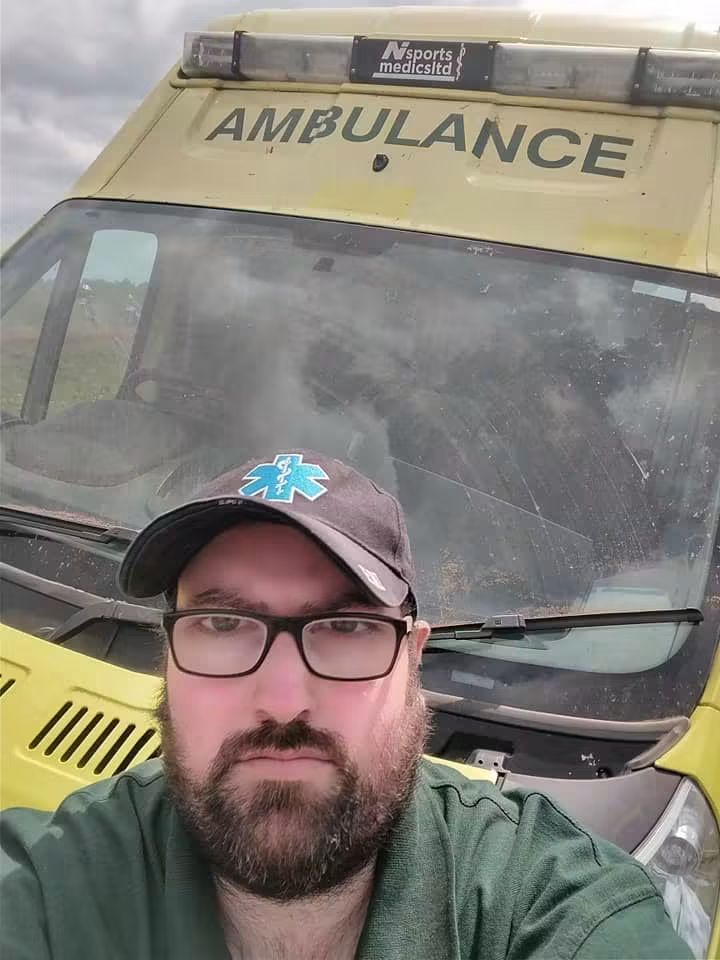
FIRST RESPONDER
Martin has a spinal condition which causes chronic pain. He began his career in the healthcare sector at just 15 years old, volunteering as a first aider at events, and has progressed through the ranks. “It was extremely hard on me to go through my training,” he explains, “but I got there. I just needed a wee bit of extra time in exams.”
Now working for the private firm Hibernian Medical Services Group, Martin attends emergency situations and provides medical support at events such as concerts, as well as training other people in First Response Emergency Care.
He’s able to assess situations and provide either hands-on support to the patient or alongside the patient, by passing medics the correct instruments or talking colleagues through what to do. “The companies I work for have organised reasonable adjustments to help me carry out my role,” he says. “There may be times where reasonable adjustments aren’t practical – if it’s going to harm me or the patient, then I would step back, for example. But I’m always there to back the other crew up.”
During study or training and employment, you’re entitled to reasonable adjustments to help you carry out the required work – this might mean adapted equipment, additional rest breaks, or modified clinical duties. According to the Health and Care Professions Council: “Many disabled people complete approved education and training successfully, register with us, and go on to practise safely and effectively with or without adjustments to support them.”
It’s worth bearing in mind that some roles – such as an NHS paramedic – might not be open to everyone because they don’t meet what’s called ‘standards of proficiency’. If you’re unable to carry out physical tasks such as lifting people or performing CPR in tight spaces as a paramedic, for example, you could instead become an emergency dispatcher, clinical advisor, or control room coordinator.
WIDE SCOPE
The NHS alone offers more than 350 different careers, ranging from clinical positions to laboratory science, administration, digital technology, psychology, pharmacy, research and management. What’s more, many roles – like speech and language therapist, counsellor and administrator – offer flexible working patterns, hybrid roles or opportunities to specialise in areas that suit your strengths.
Representation matters too. Seeing disabled people working successfully throughout healthcare helps to challenge outdated assumptions about what disability looks like and what disabled people can achieve.
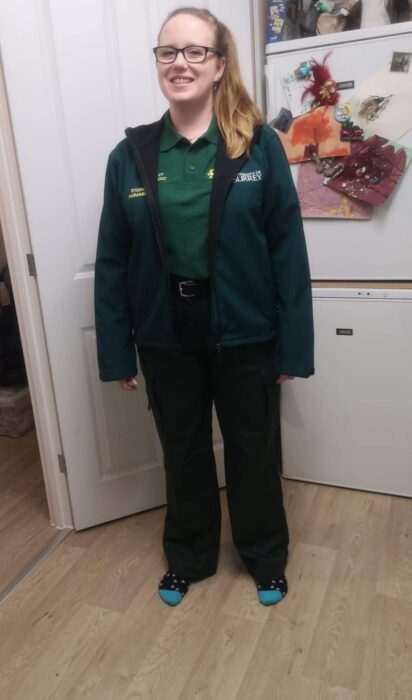
In 2022, Lucy Gatward was months away from qualifying as a paramedic. She’d spent three years at the University of Surrey and completed unpaid placement hours working on the frontline with the ambulance service throughout the Covid pandemic. “Then I caught Covid myself,” she says, “and my life changed completely.”
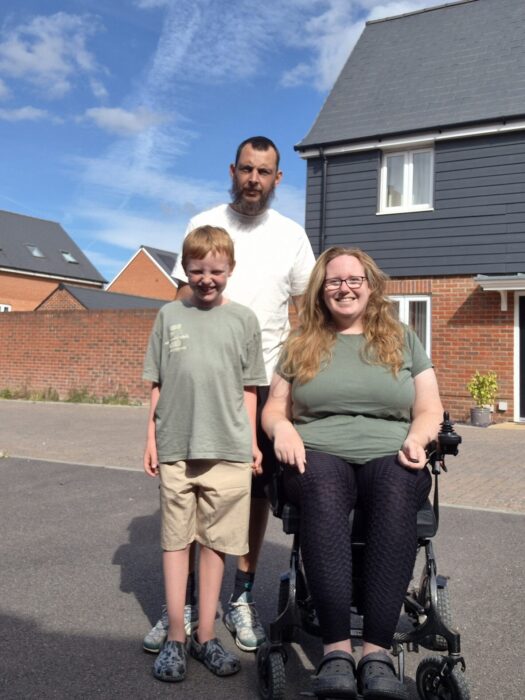
Lucy now lives with ME/CFS, POTS, and irreversible small fibre dysfunction, and requires a reclining powered wheelchair, which she’s currently fundraising for. But she’s not given up on her dream to work in healthcare. “Since 2023 I’ve been studying for an MSc in Psychology, which I’m due to complete this September, and in October I’ll begin training as a counsellor,” she explains.
LIVED EXPERIENCE
When she qualifies as a counsellor, Lucy plans to work on a self-employed basis, so she can work flexibly around her own needs and those of her son, who is autistic. She knows her lived experience will make a difference to clients, and explains: “When you’re disabled or chronically ill yourself, you have a lot more compassion and a lot more patience – because you have to.”
To anyone else considering a job in the healthcare sector, Lucy says: “Do it. You can find a way; there is always a way. It might not be the straightest or easiest of paths, but there will always be a route to do it.” She recommends researching options when it comes to roles and training. She also suggests speaking to organisations and training providers about how they can meet your needs to enable you to complete your studies or carry out the role you want to do.
The healthcare sector needs people with different talents, experiences and perspectives, and disabled people have all of these in abundance. With the right support, reasonable adjustments and an employer willing to focus on ability rather than limitation, healthcare can offer a rewarding career where your lived experience is a great asset.