
Thanks to modern technology, the world has never felt more connected. But many of us have never felt so lonely. To mark Loneliness Awareness Week, we learn more about the impacts of loneliness – and how to combat it

Remember when you used to wait at the bus stop and talk to other people about the weather? Or when you could pop to the shops and have a ten minute chat about what you’d seen on TV, or the recent headlines? The world has changed – with more people glued to their phones, and everyone seeming to be in a rush or in their own worlds.
For disabled people and carers, loneliness and isolation can sadly be part of life, thanks to the closure of support services and day centres across the country, as well as problems with accessibility and cost when it comes to using public transport and getting out and about.
Humans are wired for social contact. We need interaction; many of us thrive in company. Of course, some people prefer to spend time on their own, but when loneliness hits, it can hit hard. This year’s Loneliness Awareness Week, which takes place from 15 to 21 June, aims to inspire conversation and promote connection, with activities happening across the world – from digital choirs to coffee mornings, and fireside chats to panel discussions.
IT’S NORMAL
Feeling lonely is a normal human emotion. But if solo time goes on for too long, you’re lacking in positive or supportive relationships, or you feel like spending time alone has a negative impact on your mood, then you might be feeling lonely. That can spiral, leading you to become isolated from society, which can cause mental health issues like depression or anxiety.
Chronic or acute loneliness brings increased risks of obesity, strokes and heart attacks, Alzheimer’s, dementia and other serious health conditions. It can even impact your immune system. And, over long periods, loneliness can also cause cognitive decline due to lack of social stimulation.
MOVING FORWARD
Thankfully, there are ways to combat loneliness so you can start to feel more connected to others. Meeting people and making connections can be daunting, but take comfort in knowing that you won’t be alone with those feelings.
If cost and access are issues, the internet offers a host of opportunities to connect with like-minded people and help you find your tribe from the comfort of home. For carers, forums like the Mobilise Hub help carers connect online and get support from people who understand. For parents of disabled children, Contact is a great place to start – they can get you in touch with specific charities to support your child’s condition and lend an understanding ear.
And for disabled people, online communities can be found on platforms like Reddit and Facebook, enabling you to connect with people who are into the same things as you – such as specific bands, gaming, hobbies or local areas. Just remember to stay safe online – never give out your personal information (no matter how much you think you can trust someone), be on the lookout for scams, think before you share pictures or videos, and learn how to use blocking and reporting features for people you don’t want to hear from.
IN-PERSON CONNECTION
If you’d rather meet people in real life, there are many options out there. If you have friends or family you’ve not been in contact with for a while, a simple text or phone call for a catch-up can make the world of difference. And, if you have the opportunity to arrange an in-person catch up, reach out and make that date – you may find your friend has missed you as much as you’ve missed them!
If you don’t have many connections, seek opportunities to make them. Carers can head to their local Carers Centre to learn more about what’s on offer, from different support groups to coffee mornings or telephone helplines. If you’re disabled, you might try looking for your local Disabled People’s Organisation (check out citizensadvice.org.uk) to see if they offer any social activities, support in the community, or befriending schemes. You could even attend a Sociability Community Day to meet like-minded folk and explore local accessible spaces.
Remember, if loneliness is having a deep impact on your physical or mental health, contact your GP for a chat.
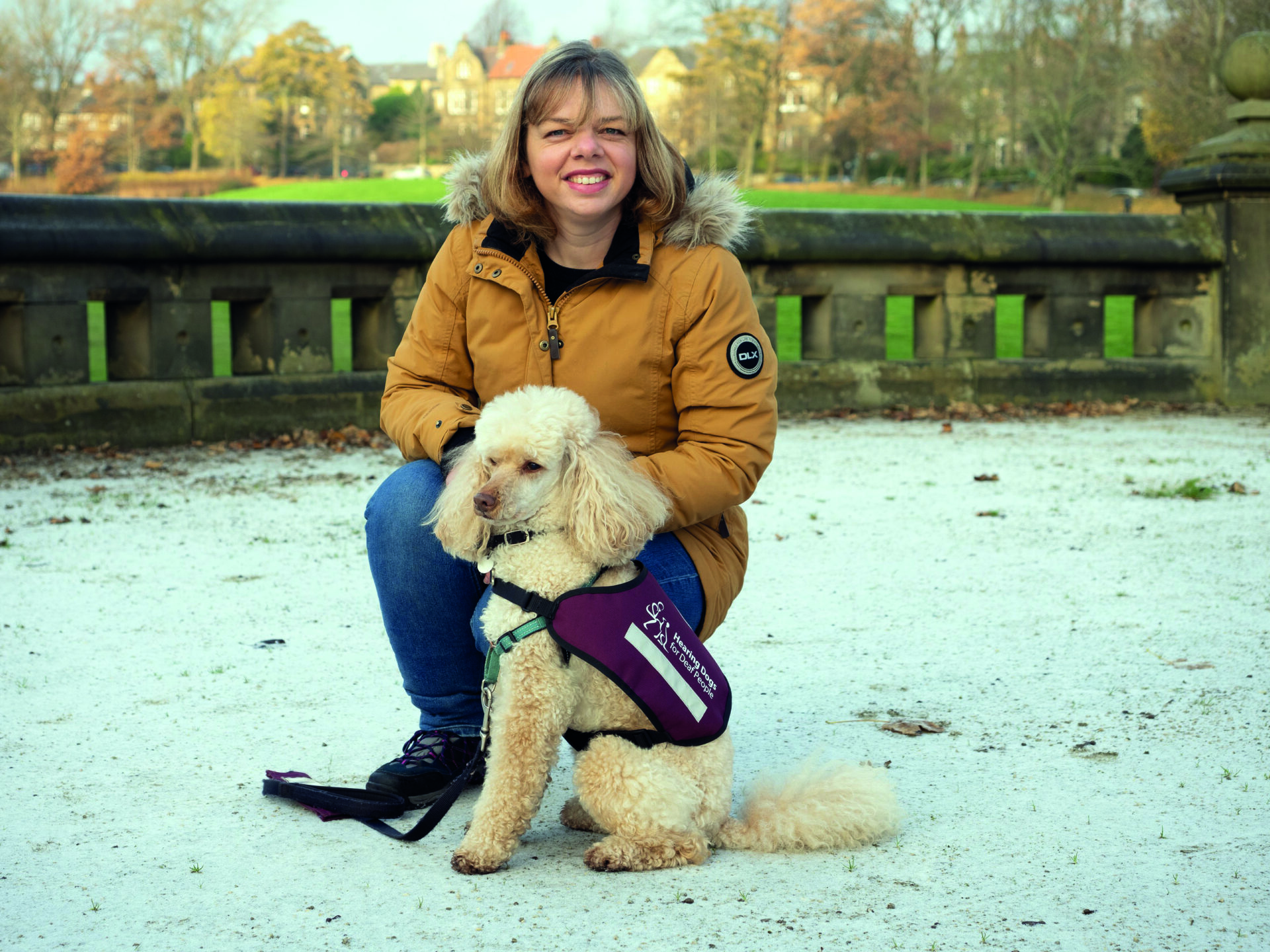
CONVERSATION STARTER
Jenny Jones felt lonely and embarrassed after losing her hearing. “I didn’t know anyone my age with hearing aids,” she admits. “Deafness, in my mind, was something that happened to older people, not people in their twenties.”
When out shopping with her mum, Jenny spotted a group of puppies in burgundy jackets representing Hearing Dogs for Deaf People (hearingdogs.org.uk). “That was the first time it dawned on me that I might be able to live more independently,” Jenny recalls.
After further health hurdles, Jenny was matched with a poodle, Xander. “Having Xander has been absolutely lifechanging,” she says. “Through him and Hearing Dogs, I’ve made lasting friendships, learned BSL, joined a BSL choir, and become part of a community I never had before.” When they’re out and about, Xander’s jacket lets people know Jenny is deaf, and she says: “He’s a natural conversation starter. I’m no longer embarrassed about my deafness. I’m proud to say that I’m deaf.”